


For years we had a clear name: CryptoBooks (the former name of the company Finbooks).
And an equally clear focus: helping clients declare their cryptocurrency investments in the most accurate and straightforward way possible.
By listening to our clients and to the market, though, we always believed that sooner or later one very specific question would come up.
Why only crypto?
A question that surfaced again and again during our exploratory research, as clients described how they invested and managed their taxes:
“I've got some stocks and ETFs in my account, can you help me with the calculations and the declaration for those too?"
It was a logical question. Most clients don't invest only in crypto.
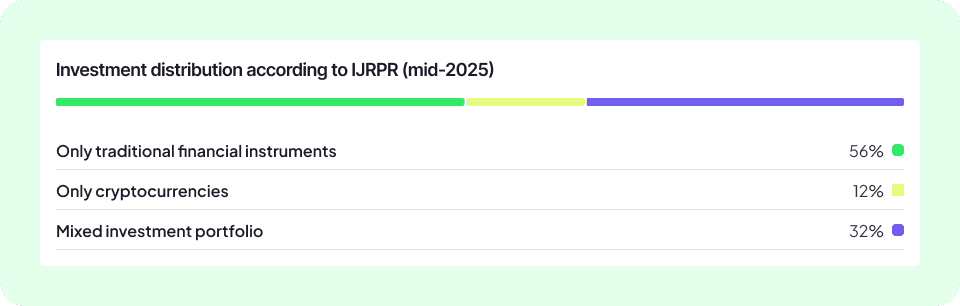
Portfolios live on several levels: digital assets on one side, traditional instruments on the other. According to a 2025 estimate by IJRPR (source), 56% of investors prefer traditional investments, around 12% focus only on cryptocurrencies, and the remaining 32% hold a mixed portfolio with both crypto and traditional finance.
We were looking at only half of our clients' financial lives.
Involving people in the process
Truly understanding what a step like this meant took time.
Traditional finance carries its own tax complexity, regulations that differ from country to country, instruments that sometimes work in a radically different way from digital assets.
We listened to investors who operate only in traditional markets, to communities of people managing mixed portfolios, and to industry professionals. In parallel, we studied every tax aspect in depth.
Once we had clarity on the domain, we faced a product decision that was anything but trivial: how should we integrate the two worlds into the application?
We designed two solutions and put them in front of more than 180 clients through an interactive survey: one that merged everything into a single view, and one that kept crypto and traditional finance in separate sections with a shared dashboard.
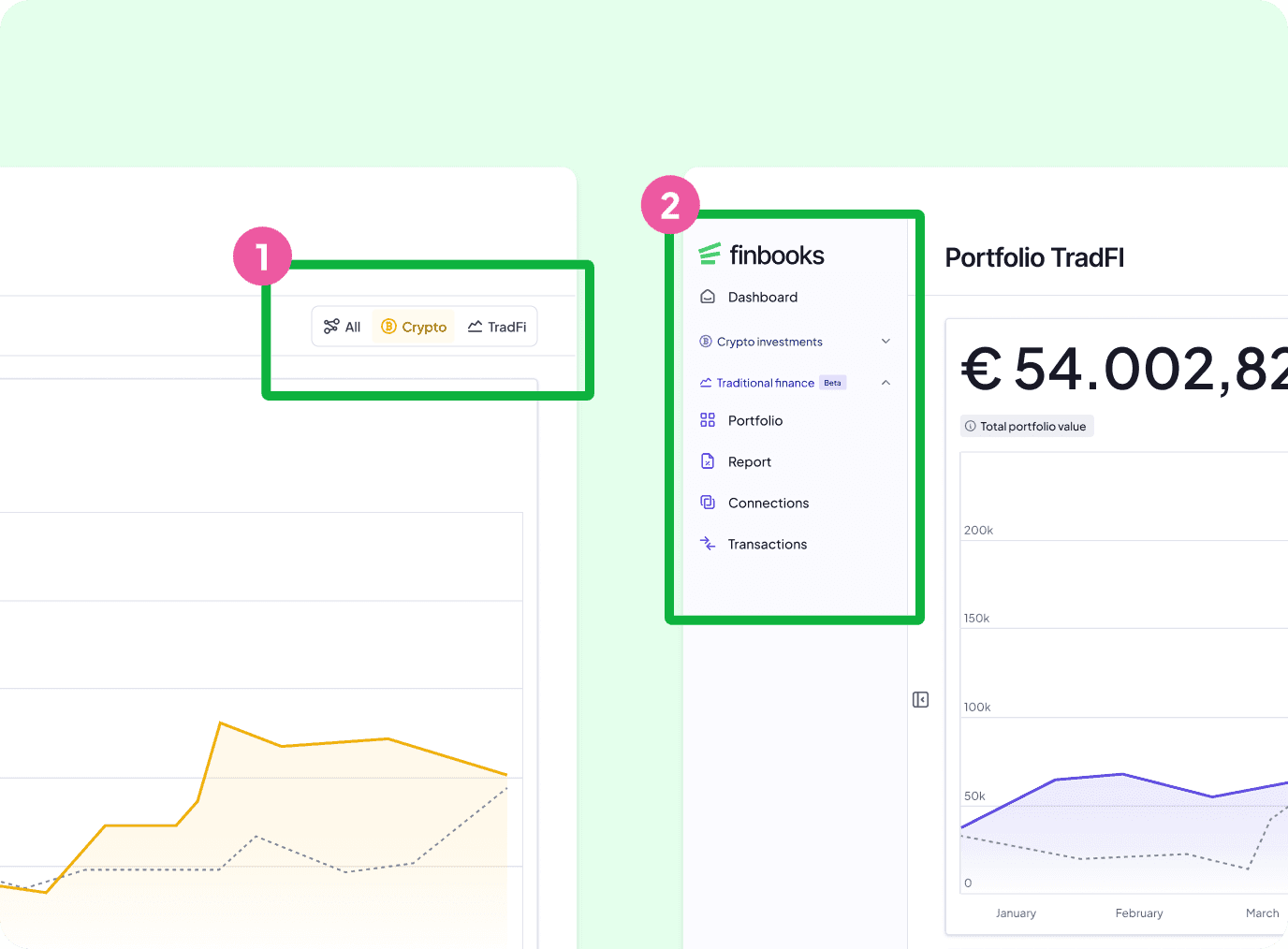
The result was clear-cut: the second one won.
The reason was evident in the answers: clients wanted clarity, not confusion, and although the portfolio is a single whole in terms of total investment, the two worlds are seen as something to be managed separately.
Crypto and traditional finance follow a different logic and call for different attention, and mixing the two worlds would have made everything harder to read.
What exists now
Since April 2026, Finbooks also supports the management and declaration of traditional finance investments, in a beta version released for Italy only but coming soon to every country we serve.
And there's one more thing that changed in April 2026 along with this feature: the name. CryptoBooks became Finbooks.
It wasn't a surface-level rebrand. It was the recognition of what clients taught us over time: that financial life is broader than a single asset class, and that a tool aiming to be truly useful has to be able to see all of it.
This story was born from your questions too.
Thank you to the more than 180 clients who tested the prototypes and helped us choose the right direction, and thank you to the thousands of CryptoBooks clients who can now, thanks to Finbooks, manage the entirety of their investments.