

For a long time, one question has come up again and again from our clients whenever they look at the numbers in front of them: "why does this transaction show this particular gain?"
The calculation itself is correct, we know that. But for the user it remains a number that appears without explanation, and without an explanation it is hard to trust it, especially when tax filing and payments are on the line.
A cost basis nobody could see forming
The cost basis of a transaction is rarely the result of a single event. It can come from purchases, partial sales and transfers made at different times, sometimes years apart.
Finbooks has always calculated this correctly, applying the specific rules of each country and updating them promptly whenever legislation changes. But the origin of the resulting number was always a mystery: there was no way for the user, or their accountant, to trace how that gain or loss had actually formed.
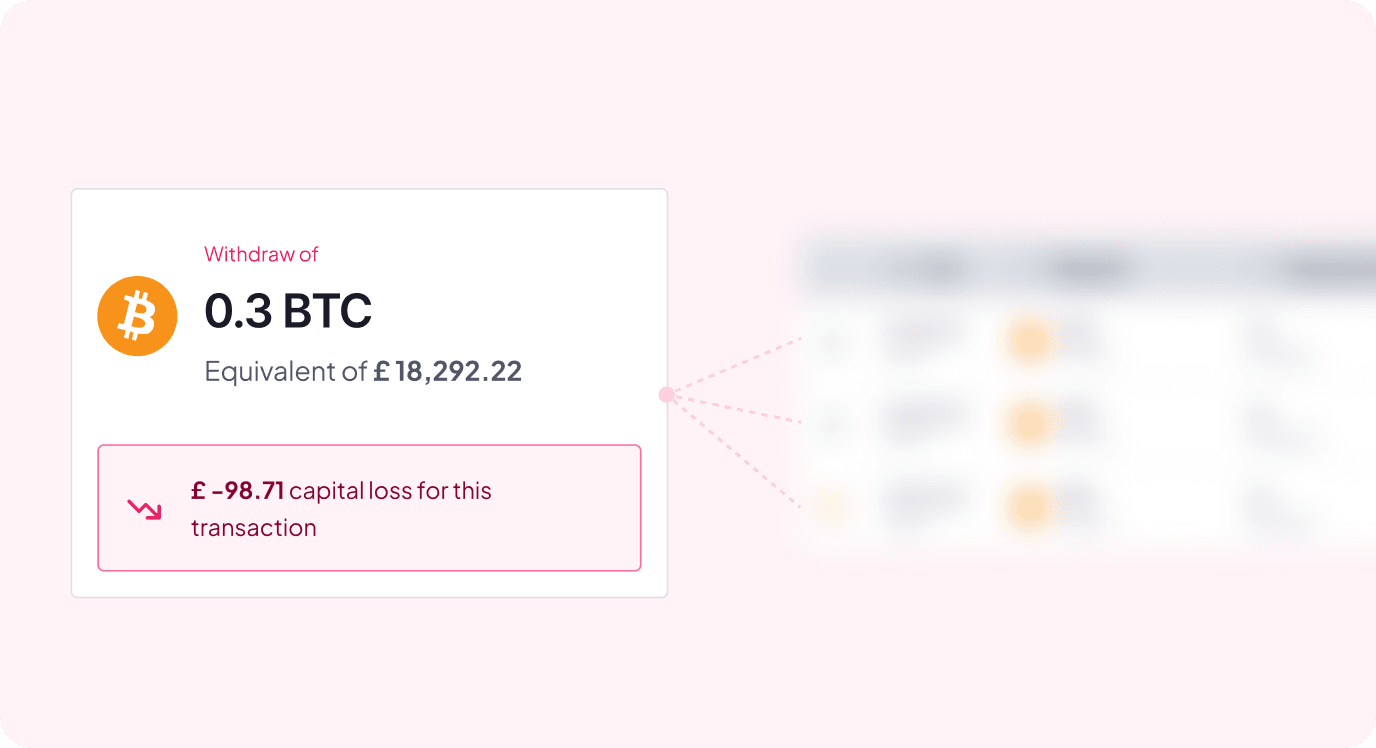
In the event of a tax audit, or even just a doubt, the platform offered no way to reconstruct and verify that origin in full, even though all the data and calculations were already there.
The burden of explaining fell entirely on customer support, transaction by transaction, with more than 2,000 specific requests over the past couple of years.
What to show, and how much
The real question was never whether to show the origin of the cost basis, but how deep to go.
The full graph of transactions contributing to a value can have many levels, and showing all of it would have made the feature unreadable rather than clarifying. It would be like showing the family tree of a very large family, going back dozens and dozens of generations.
To make these calculations visible, we chose to stop at the first level: the immediately preceding transactions that generated the cost basis, each with its type, date, quantity and contribution.
The sum of those contributions always matches the value of the transaction being analysed: a constraint that guarantees what the user sees is verifiable, not just indicative.
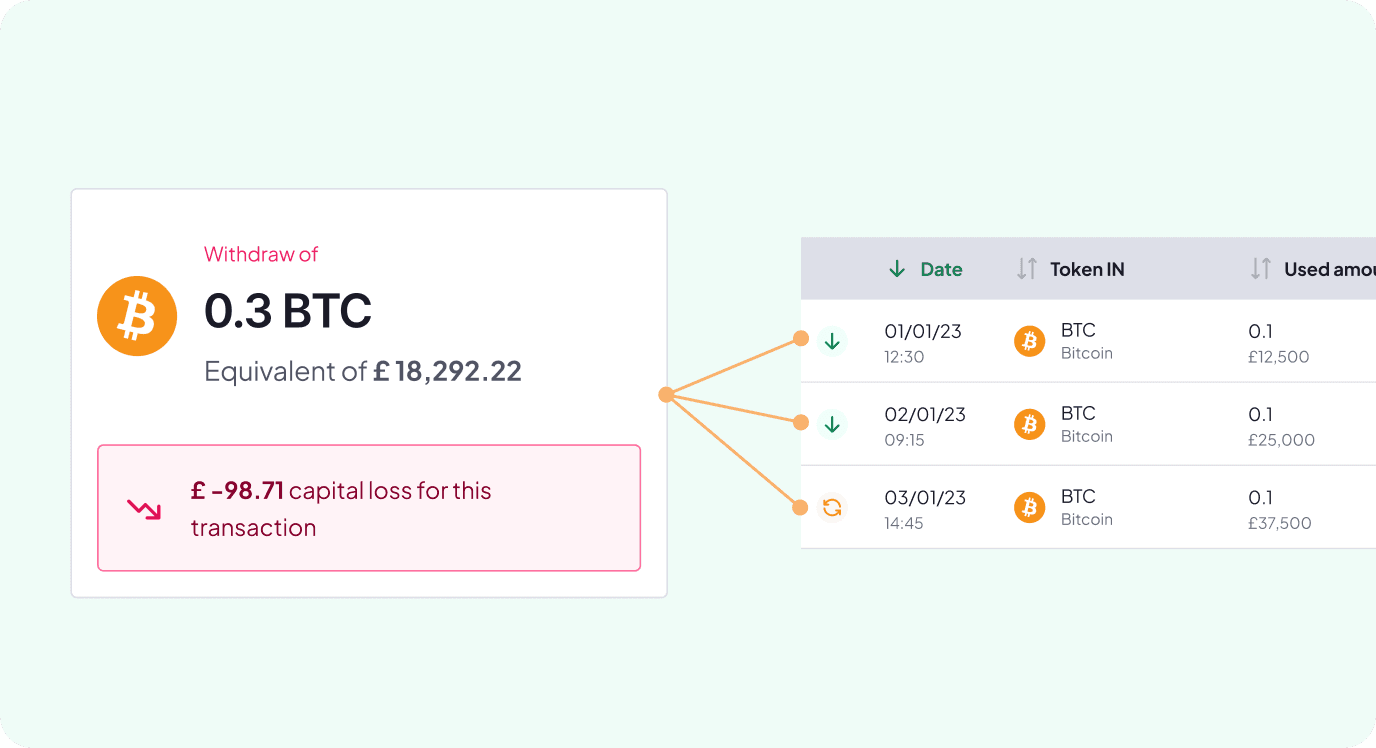
For now we've left out the full visual reconstruction of the entire tree, as well as the "Proof of Funds" report designed for anyone who needs to produce a formal document on the origin of funds: the latter is under review to decide how to handle it in Finbooks' future.
Where a transaction also carries a fee, the same logic repeats on a dedicated tab: the gain or loss on the fee, together with its originating transactions. Maximum transparency and precision.
What exists now
The feature will be available in the detail view of every transaction: a new tab shows the cost basis and the table of originating transactions, with an additional tab for the fee's gain or loss when present. A simple detail with a big impact.
If you're one of the people who asked us, in chat or during an interview, to see where a number comes from, this is the answer.
Thank you to the more than 650 clients who over the years helped us understand how important it was to make this calculation transparent, and to the dozens of people who, during our research interviews, helped us define and design this solution.